

Thanksgiving with a 14-pound turkey locked in the oven and four side dishes competing for a surface that already has the turkey — so the casserole waits, the rolls go in late, and the meal arrives in rounds rather than together. Or a household where one person needs the oven at 425 degrees for roasting vegetables while another recipe calls for 325 degrees and a gentle, steady heat, and the negotiation about whose dish goes first happens again as it does nearly every week. A single oven turns meal coordination into a logistics problem, and for households that cook seriously and regularly, the limitation becomes more frustrating over time rather than less.
A double oven stove resolves the scheduling conflict at its source. Colder's carries a full selection of double oven stoves — gas, electric, and smart-connected — from the brands homeowners rely on for long-term appliance quality. This guide covers everything needed to make a confident decision: what a double oven stove is and how the two cavities work, which fuel type suits which household, the key features to evaluate, an honest look at who benefits most, and the real trade-offs that belong in the conversation before the purchase is finalized.
Shop Double Oven Stoves at Colder's
Our appliance experts can walk you through fuel types, cavity sizes, and convection features in person — visit the Colder's showroom to see double oven ranges up close before you decide.
Key Takeaways
- Two Ovens, One Footprint: A double oven stove fits the same 30-inch cutout as a standard single-oven range — no kitchen remodel or cabinet changes needed.
- Check Convection in Both Cavities: Many double oven stoves only include convection in the lower oven; if even baking in both matters to your cooking, verify this spec before you buy.
- The Storage Drawer Is Gone: The second oven cavity occupies the space a standard range uses for a warming or storage drawer — a trade-off that consistently surprises buyers after installation.
- Worth It for Multi-Dish Cooks: Households that regularly cook two dishes at different temperatures will use both cavities constantly; smaller households with simple routines are unlikely to recover the price premium.
What Is a Double Oven Stove and How Does It Work?
A double oven stove is a standard-footprint range — typically 30 inches wide, the same width as most single-oven ranges — that contains two separate oven cavities stacked vertically, each with its own independent temperature control. The lower cavity is the primary oven: larger, designed for main dishes, roasts, large pans, and anything that needs full oven capacity. The upper cavity is smaller, positioned above the lower oven, and suited to sides, baked goods, or any second dish that needs different temperature or timing than what is in the lower oven.
A double oven stove is not the same as a double wall oven. Double wall ovens are two separate oven units mounted into a wall cabinet, with no cooktop — a configuration that requires specific cabinet space and typically costs significantly more. A double oven range includes a full cooktop and both oven cavities in a single freestanding or slide-in unit, replacing a standard range without requiring any structural or cabinet changes.
Typical cavity sizes: the lower oven holds approximately 4.0 to 4.5 cubic feet — enough for a standard roasting pan, a full sheet tray, or a large Dutch oven. The upper oven is smaller, typically 2.0 to 2.5 cubic feet, which suits a 9x13 baking dish, a 9-inch round cake pan, or most side dishes but not a full-size turkey or large roast. The total combined capacity of a double oven stove is generally similar to a single-oven range (5.0 to 6.2 cubic feet) — it is the ability to divide and control that space independently that creates the real value, not additional cubic footage.
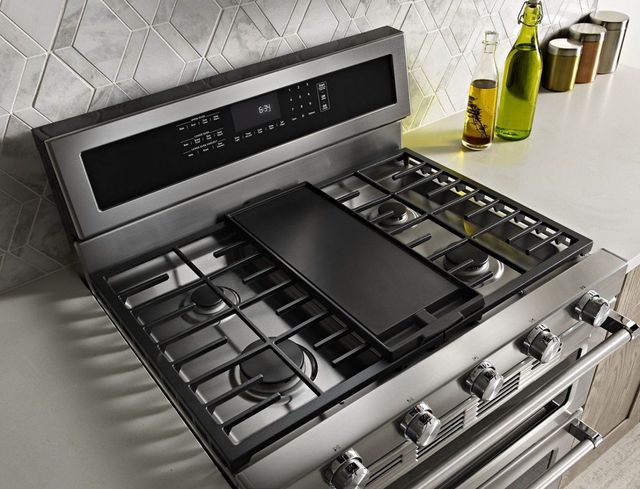
One common misconception worth addressing directly: the cooktop on a double oven range is not reduced. You still get 4 to 5 burners on the surface, identical to a standard single-oven range. The extra oven cavity is built into the lower portion of the range, in the space that a single-oven range uses for a warming drawer or storage drawer.
Read more:
Single Oven vs. Double Oven Stove: Which One Is Right for Your Kitchen?
| Feature | Single Oven Range | Double Oven Stove |
|---|---|---|
| Oven Cavities | 1 large cavity | 2 independent cavities |
| Total Capacity | 5.0–6.0 cu. ft. | 5.0–6.2 cu. ft. (split) |
| Cavity Size | Full 5+ cu. ft. | Lower ~4 cu. ft., upper ~2 cu. ft. |
| Convection | Usually standard | Often lower cavity only |
| Storage Drawer | Usually included | Typically absent |
| Cooktop Burners | 4–5 burners | 4–5 burners (unchanged) |
| Price Range | $700–$2,500 | $1,200–$4,000 |
| Best For | Everyday cooking, small households | Multi-dish cooking, holiday meals |
Choosing the Right Fuel Type for Your Double Oven Stove
Double oven stoves are available in four fuel configurations, each with distinct advantages and practical requirements. Choosing the right fuel type is as important as choosing the right model.
- Gas: The most popular choice for double oven ranges among households that already have a gas line. Gas burners respond immediately to heat adjustments — the flame changes the moment you turn the dial — which gives cooks precise, visible control on the stovetop. Gas ovens can run slightly less even than electric in heat distribution, but most modern gas double oven stoves include convection fans that compensate effectively. Key consideration: if you are upgrading from an electric range, a gas double oven stove requires a gas line installation — a meaningful cost and planning factor if one is not already in place.
- Electric: Electric double oven stoves provide more consistent, even heat distribution in the oven cavities than gas equivalents, which benefits baking. The smooth glass cooktop is easy to clean and provides a flat, flush cooking surface. Electric ranges require a 240V outlet, which most kitchens already have if they currently use an electric range. Electric double oven stoves are widely available and typically priced lower than dual-fuel models.
- Dual Fuel: A dual-fuel double oven range combines a gas cooktop — for stovetop responsiveness — with electric oven cavities — for consistent, even baking heat. This combination is the preference of serious home cooks who want the best performance characteristics of both fuel types in a single range. Dual-fuel models typically cost $500 to $1,000 more than equivalent gas-only ranges and require both a gas line and a 240V electrical outlet, making installation more involved than either single-fuel option.
- Induction: Induction double oven ranges use electromagnetic heating that boils water faster than gas or electric, produces no open flame, and is the most energy-efficient cooktop technology available. Induction requires induction-compatible cookware (magnetic-base pots and pans — most cast iron and stainless steel qualify, but aluminum and copper do not). Induction double oven ranges are the newest and least widely stocked category but are growing in availability as demand increases in 2026.
Double Oven Stove Buying Guide: Convection, Controls, and Smart Features
Beyond fuel type, the features that differentiate one double oven stove from another are worth evaluating carefully — especially since some common assumptions about double oven features turn out to be wrong.
- Convection in both cavities vs. just one: This is the most important feature detail buyers overlook. Many double oven stoves include convection — a fan that circulates hot air for faster, more even cooking — only in the lower oven. The upper oven in these models is a standard radiant heat cavity, which can produce uneven results when baking delicate items like cookies, souffles, or pastry. If even baking in both ovens matters to your cooking, verify before purchasing that convection is available in the upper cavity, not just the lower. This limitation is often buried in specifications and rarely mentioned prominently in marketing.
- Control panel clarity: Operating two independent ovens simultaneously requires clear, intuitive controls. A confusing control layout introduces the real risk of setting the wrong cavity to the wrong temperature during a busy cooking session. Test the controls in the Colder's showroom before purchasing — this is one feature that product descriptions cannot convey.
- Self-cleaning function: Available on many double oven stove models, but check whether the self-cleaning cycle applies to one or both cavities. Some models offer self-cleaning only in the lower oven. Knowing this in advance prevents the frustration of manual-cleaning the upper cavity after assuming it self-cleans.
- Smart and connected features: Wi-Fi-enabled double oven stoves allow remote preheat via smartphone app, temperature monitoring while away from the kitchen, and in some models, recipe-guided cooking that adjusts oven settings automatically. For busy households, the ability to start preheating from another room or from the car is a practical convenience, not just a novelty feature.
- Slide-in vs. freestanding style: Freestanding double oven ranges have finished sides and stand independently anywhere in the kitchen. Slide-in ranges are designed to sit flush with the surrounding countertops, creating a built-in, integrated appearance. Slide-in models generally cost more and require a space where the range sits between counters on both sides. If your kitchen has that configuration and aesthetics matter, the slide-in look is a meaningful visual upgrade over freestanding.
Is a Double Oven Stove Worth It? Who Benefits Most and Who Should Pass
A double oven stove is a genuine upgrade for specific households and cooking styles — and a premium expense that doesn't pay off for others. Here is an honest breakdown of both sides.
Who Gets Real Value from a Double Oven Stove
- Multi-dish cooks: Households that regularly prepare two or more dishes requiring different oven temperatures — a roast at 350 degrees and a casserole at 400 degrees, for example — will use both cavities constantly. This is the primary value proposition and it pays off quickly for households that cook this way several times a week.
- Holiday entertainers: Thanksgiving, Christmas, and large family gathering meals are the scenarios where a single oven becomes a real operational bottleneck. A double oven stove eliminates the staggered timing that makes holiday cooking stressful and meal arrival uneven.
- Households with mixed dietary needs: Families with members who eat different diets — one cooking meat at high temperature while another bakes a vegetarian dish that can't share oven space — benefit directly from two independent cavities running simultaneously.
- Bakers who also cook savory dishes: The upper oven's smaller size heats to baking temperature faster than the full lower cavity, making it efficient for desserts and baked goods while the lower oven handles the main course.
Who Should Think Carefully Before Upgrading
- Small households with simple cooking routines: A one- or two-person household that primarily reheats, bakes occasional single items, or cooks simple weeknight meals is unlikely to use both ovens at once with any regularity. The price premium for the double oven capability won't be recovered in practical value.
- Anyone who mainly reheats: If the oven is used primarily for reheating leftovers, warming plates, or occasionally baking a single dish, a double oven stove is significantly more than the situation requires.
- Budget-conscious buyers: A good single-oven range costs $700 to $1,500. A comparable double oven stove starts at $1,200 and scales to $4,000. If the cooking style doesn't genuinely require simultaneous multi-temperature oven use, that price difference is not justified.
One trade-off that consistently surprises buyers after purchase: the loss of the storage drawer. Single-oven ranges almost universally include a warming or storage drawer below the oven. Double oven stoves replace that drawer with the second oven cavity. For households that store baking sheets, racks, cast iron, and oven-safe cookware in that drawer, the loss creates a real storage problem that requires planning for alternative storage before the new range arrives.
Using a Double Oven Range Comfortably: What to Know About Height, Access, and Reach
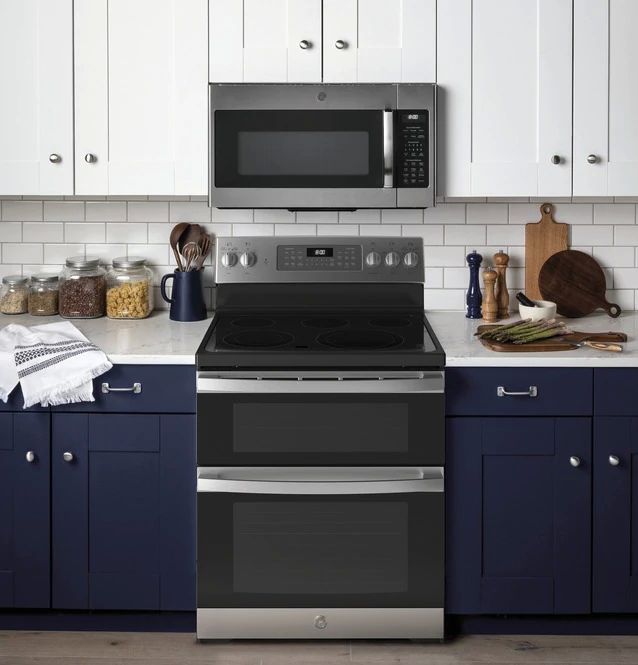
The physical experience of using a double oven stove is meaningfully different from a single-oven range, and the ergonomic reality deserves honest attention before purchase.
The lower oven on a double oven range sits close to floor level — closer than the single large oven cavity on a standard range. Reaching into the lower oven to place or remove a heavy roasting pan, adjust a rack, or check on a dish requires significant bending at the waist. For users with lower back pain, knee problems, hip limitations, or reduced mobility, this can be genuinely uncomfortable and potentially unsafe with heavy cookware. The ergonomic challenge compounds when removing a heavy item like a 15-pound turkey or a full Dutch oven filled with braised meat from a near-floor position.
The upper oven position introduces a different issue for shorter users. While the upper cavity is easier to access than a very low lower oven, shorter cooks may find it difficult to see inside the upper oven clearly, reach the back of the cavity comfortably, or safely lift items in and out at that height. Testing reach in both directions is worth doing in person before committing to a purchase.

The recommendation from experienced appliance buyers and kitchen specialists is consistent: visit a showroom and specifically simulate reaching into the lower oven at its lowest rack position before deciding. This is the number-one ergonomic complaint that buyers surface post-purchase — they discovered the access problem after the range was installed rather than before. The Colder's showroom allows hands-on interaction with display models, which is the only way to know how the lower cavity position actually works for your height and physical condition.
If ergonomics are a primary concern, an honest alternative worth considering: a single-oven range at standard height paired with a quality countertop toaster oven or convection oven can replicate most of the multi-temperature functionality of a double oven stove with much better accessibility at both height points. For some households, this combination serves the cooking need better than the double oven format.
Double Oven Stove Pros and Cons: A Balanced Breakdown for Every Type of Cook
A double oven stove sounds like an automatic upgrade — and for the right household and cooking style, it genuinely is. But it comes with real trade-offs that are worth understanding clearly before the purchase decision is made, because the cons affect daily use as consistently as the pros.
Pros
Cook two dishes at different temperatures simultaneously
The core value of a double oven stove — two independent cavities with independent temperature controls eliminate the scheduling and compromise that a single oven forces on multi-dish meals.
Upper oven heats faster for quick cooking tasks
The smaller upper cavity reaches target temperature more quickly than a full lower oven, making it efficient for time-sensitive baking, reheating, or smaller dishes where heating a full large cavity would waste time and energy.
Same kitchen footprint as a single-oven range
A 30-inch double oven stove fits the same cutout as a standard 30-inch single-oven range — no kitchen renovation, no cabinet modification, no measurement surprises. The upgrade is a straight appliance swap.
More energy-efficient for smaller tasks
Running only the smaller upper oven for a side dish or baked good uses significantly less energy than heating the full cavity of a single large oven for the same item.
Transforms holiday and large-batch cooking
For Thanksgiving, Christmas, and large-scale meal preparation, two independent ovens running simultaneously change the logistics of cooking from a constraint management exercise into a straightforward multi-track workflow.
Cons
Lower oven ergonomics are a real daily challenge
The lower cavity sits close to floor level, requiring significant bending to access — a physical difficulty that compounds with heavy cookware and becomes a genuine safety concern for users with back, hip, or mobility limitations.
The storage drawer disappears
The second oven cavity occupies the space that a single-oven range dedicates to a warming or storage drawer. Households that rely on that drawer for sheet pans, racks, cast iron, and cookware need to plan alternative storage before the new range arrives.
Convection is often limited to one cavity
Many double oven stoves only include convection in the lower oven. Buyers who assume both cavities have convection — and use the upper oven for baking — may encounter uneven results that would not happen in a convection-equipped single oven.
Higher cost than comparable single-oven ranges
The price premium for double oven capability starts at several hundred dollars and increases substantially in higher-tier models. For households that don't regularly cook multiple simultaneous dishes, that premium does not return value in proportion to its cost.
Top Double Oven Stoves Available at Colder's
Cafe 30" Stainless Steel Slide-In Gas Range (CGS750P)
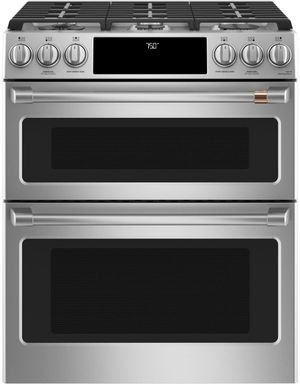
The Cafe 30-inch Slide-In Gas Range brings premium design and gas cooking precision to kitchens where the built-in look matters as much as performance. The slide-in configuration sits flush with surrounding countertops, eliminating the gap that freestanding ranges leave and giving the kitchen the clean, integrated appearance of a professional installation. Gas burners respond instantly to heat adjustments, giving cooks direct, visible control from a simmer to a high-heat sear. The stainless steel finish holds up to daily use while maintaining the high-end visual presence that the Cafe appliance line is built around.
Top Features
- Style: 30-inch slide-in — sits flush with countertops for a built-in look
- Fuel: Gas — immediate, responsive heat control on the cooktop
- Finish: Stainless steel — premium and durable
- Brand: Cafe — GE's premium residential appliance line
- Best for: Kitchens where countertop-flush aesthetics are a priority alongside gas performance
GE Profile 30" Smart Freestanding Electric Double Oven Range (PB965)
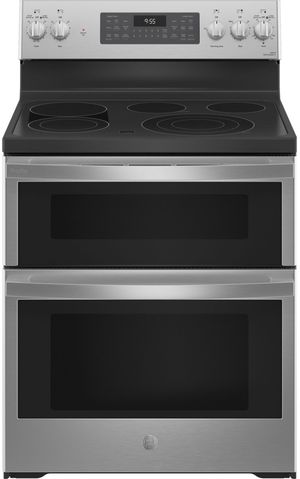
The GE Profile PB965 brings smart connectivity and double oven capability to the freestanding electric range category. Wi-Fi integration allows remote preheat, temperature monitoring, and oven control via smartphone — a practical advantage for busy cooking schedules where getting the oven started from another room saves meaningful time. Two fully independent electric oven cavities give households the multi-temperature cooking flexibility that a single oven cannot provide. The fingerprint-resistant stainless steel finish keeps the range looking clean through daily kitchen use without requiring constant wiping.
Top Features
- Oven: Double oven — two independent electric cavities with separate temperature controls
- Smart features: Wi-Fi connected — remote preheat and monitoring via smartphone
- Fuel: Electric with smooth glass cooktop
- Finish: Fingerprint-resistant stainless steel
- Style: 30-inch freestanding — fits standard range openings
GE 30" Stainless Steel Freestanding Electric Double Oven Range (JBS86SPSS)
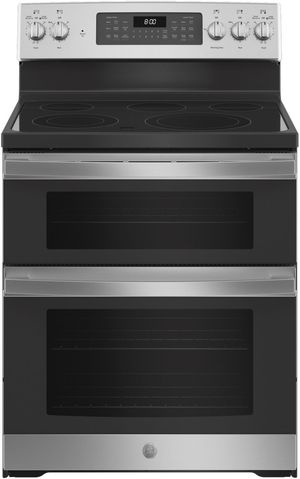
The GE JBS86SPSS delivers reliable double oven electric range performance at a more accessible price point, making it a strong entry point for households making their first double oven stove upgrade. Two independent electric oven cavities with separate temperature controls handle the multi-dish cooking scenarios that drive the decision to upgrade, without the added cost of smart connectivity or dual-fuel capability. The stainless steel finish is clean and neutral, pairing with most kitchen designs. GE's broad service network and parts availability make this a practical long-term appliance purchase for everyday household cooking.
Top Features
- Oven: Double oven — two independent electric cavities
- Fuel: Electric — consistent, even heat distribution
- Finish: Stainless steel
- Style: 30-inch freestanding
- Best for: First-time double oven upgrades — strong performance at an accessible price
KitchenAid 30" Stainless Steel Freestanding Gas Double Oven Range (KFGD500E)
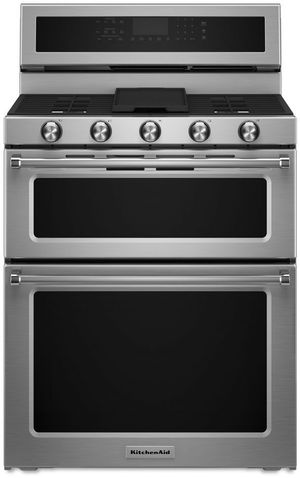
The KitchenAid KFGD500E combines the stovetop responsiveness of gas with the independent temperature control of a double oven configuration — the pairing that serious home cooks consistently choose for demanding everyday cooking. Two independent oven cavities allow the lower cavity to run the main dish while the upper manages sides or desserts at a completely different temperature simultaneously. KitchenAid's construction quality shows in the burner hardware, oven door seals, and control precision throughout. For households that cook regularly at a high level and want equipment that performs accordingly, the KFGD500E is built to match.
Top Features
- Oven: Gas double oven — two fully independent cavities
- Fuel: Gas — responsive cooktop with 5 burners
- Finish: Stainless steel
- Style: 30-inch freestanding
- Construction: KitchenAid quality hardware and precision oven performance
Maytag 30" Fingerprint Resistant Stainless Steel Freestanding Electric Range (MET8800FZ)
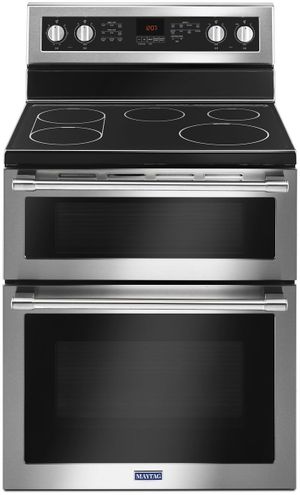
The Maytag MET8800FZ is a double oven electric range built around the durability and practical reliability that Maytag has established in the residential appliance market. Two independent electric oven cavities give households the multi-temperature cooking flexibility that eliminates oven scheduling conflicts during multi-dish meal preparation. The fingerprint-resistant stainless steel finish is a genuine daily quality-of-life improvement in an active kitchen — the range maintains a presentable appearance through regular use without requiring constant attention. Maytag's reputation for appliance longevity makes the MET8800FZ a strong choice for households looking for a double oven stove built to outlast average-market alternatives.
Top Features
- Oven: Double oven — two independent electric cavities
- Fuel: Electric with smooth cooktop
- Finish: Fingerprint-resistant stainless steel — stays clean through daily use
- Style: 30-inch freestanding
- Brand: Maytag — built for long-term appliance durability
Whirlpool 30" Stainless Steel Freestanding Electric Double Oven Range (WGE745C0F)

The Whirlpool WGE745C0F brings two independent electric oven cavities to a clean stainless steel freestanding range at a price point that makes the double oven upgrade accessible without requiring a premium appliance budget. The upper oven heats quickly for smaller or time-sensitive cooking tasks while the lower cavity handles larger dishes with longer cook times — a natural division that makes weeknight meal preparation meaningfully more efficient for households cooking multiple items every evening. Whirlpool's broad service network and widely available parts make this a practical long-term purchase for everyday household double oven cooking.
Top Features
- Oven: Double oven — two independent electric cavities with separate controls
- Fuel: Electric with smooth glass cooktop
- Finish: Stainless steel
- Style: 30-inch freestanding
- Best for: Value-conscious buyers making the double oven upgrade for everyday multi-dish cooking
Upgrade Your Kitchen With a Double Oven Stove — Shop Colder's for Expert Guidance
A double oven stove is a meaningful kitchen upgrade for households that regularly cook multiple dishes at different temperatures — and understanding the real trade-offs, from ergonomics to the loss of the storage drawer to convection availability in each cavity, makes the difference between a purchase that delivers on its promise and one that surprises you after installation. The right model depends on your fuel type preference, cooking habits, kitchen layout, and how actively you will use both cavities.
Visit the Colder's showroom to see and interact with double oven stove models in person — check control clarity, test the lower oven reach at its lowest rack position, compare the upper cavity size against your largest baking pans, and talk with staff who can help match you to the right model for your cooking style and kitchen. These are decisions a product page cannot make for you, but an in-store visit resolves quickly.
Read more:
Frequently Asked Questions about Double Oven Stoves
A double oven range is a single unit that combines a cooktop with two oven cavities in a standard 30-inch freestanding or slide-in range footprint — it replaces a standard kitchen range with no structural changes needed. A double wall oven is two separate oven units mounted into a wall cabinet with no cooktop included. Double wall ovens require specific cabinet space and are a separate appliance from the cooktop or range. Double wall ovens typically offer larger combined oven capacity and better ergonomic access height but cost significantly more and require dedicated installation planning.
No. A 30-inch double oven range occupies the same width footprint as a standard 30-inch single-oven range. The second oven cavity is stacked vertically within the same range housing — in the space that a single-oven range uses for a warming or storage drawer. There is no additional floor space required, and no countertop or cabinet modification needed to install a double oven range in a standard kitchen cutout.
Double oven stoves are available in gas, electric, and dual-fuel configurations. Gas double oven ranges are the most popular choice for households that prioritize stovetop responsiveness and already have a gas line. Electric double oven ranges offer more consistent oven heat distribution and are widely available. Dual-fuel double oven ranges combine a gas cooktop with electric oven cavities for the best performance characteristics of both fuel types, at a higher price point and with both a gas line and 240V electrical outlet required.
The lower oven cavity is the larger of the two. It typically holds 4.0 to 4.5 cubic feet — large enough for a standard roasting pan, a full sheet tray, or a large Dutch oven. The upper oven is smaller, usually 2.0 to 2.5 cubic feet, suited to a 9x13 baking dish, smaller casseroles, baked goods, and side dishes, but not large roasts or full-size pans that require the full oven width. The total combined capacity of both cavities is generally similar to a single-oven range.
No — this is one of the most important features to verify before purchasing. Many double oven stoves include convection (a circulating fan for faster, more even heat) only in the lower oven. The upper oven in these models uses standard radiant heat, which can produce uneven baking results for delicate items like cookies, pastry, or souffles. If convection performance in both cavities matters for your cooking, specifically confirm this feature in the product specifications before deciding — it is often not highlighted prominently in marketing materials.
For a small household that primarily cooks simple weeknight meals, reheats, and rarely needs two simultaneous oven temperatures, a double oven stove is generally not worth the price premium. The additional cost over a comparable single-oven range starts at several hundred dollars and increases significantly in higher-spec models. That investment returns value only when both cavities are used regularly. A small household would need to cook multi-temperature dishes with real frequency — several times per week — to justify the upgrade over a high-quality single-oven range.
Why Trust Colder’s?
Since 1942, we at Colder's pride ourselves on offering value, selection, and service. Serving Southeastern Wisconsin with four showrooms that stock quality name-brand furniture, appliances, and mattresses, Colder’s is sure to house exactly what you are looking for. And if you can't find it on our floors, chances are, we can order it for you. As a local, family-owned company, we are always doing our best to provide the highest value at the lowest cost to everyone who walks through our doors.
Colder’s is committed not only to continuously offering can’t-miss sales but also to working with each customer, making sure that you take advantage of every possible markdown — that’s our best price guarantee. Still need help? We offer zero percent appliance and furniture financing for your home needs!
Shop Ranges at Colder’s
Don’t put off happiness — and shop furniture online for unbeatable prices at Colder’s. Our friendly experts are always happy to help you explore the full Benchcraft furniture line, whether you call us at 414-476-1574 or use our online chat feature. Better yet, stop by one of our Colder’s locations in West Allis, Oak Creek, Delafield, and Grafton, Wisconsin to touch, see, feel, and experience home products that fulfill your dreams. Visit us today!
Learn More: England Furniture vs Ashley Furniture: Which Brand Wins?