

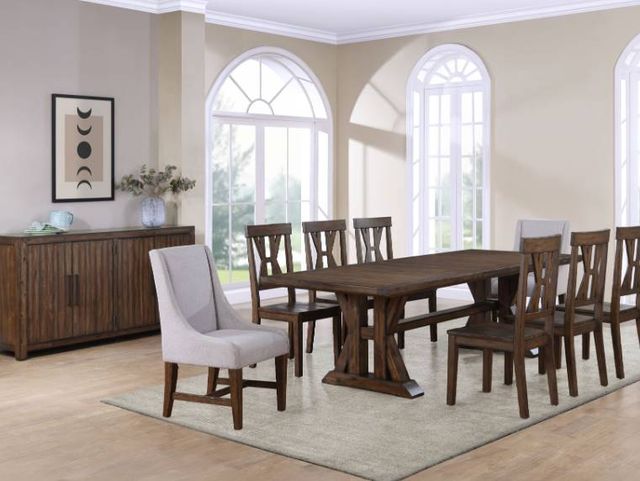
The table is set, the roast is resting, and the room still looks like a page out of a catalog nobody picked. Six identical chairs, six identical backs, one finish repeated all the way around, and the whole arrangement reads flat under the light. The two seats at the head and foot are the worst of it, because those hard slats start pressing into a guest’s shoulder blades about twenty minutes in, and people quietly rotate away from them. Dining room accent chairs fix both problems at once, and they do it without asking you to replace the table you already like.
Give Your Table Two Seats Everyone Wants
Our team helps you match accent chairs to the table you already own, with fabric swatches on hand and delivery with setup. Shop dining chairs in person or online, with financing available.
Explore dining room accent chairsThe fix is smaller than the problem looks. Swapping two chairs is usually all it takes, and our team at Missouri Furniture has walked hundreds of shoppers through that exact swap, table measurements in hand. This guide covers what an accent chair actually is and how it differs from a standard side chair, the handful of measurements that decide whether a chair fits under your table, seven styles worth considering, the fabric and frame details that separate a chair that lasts from one that sags, and how to mix accent chairs with the side chairs you already own without the room looking accidental.
Key Takeaways
• Two chairs do most of the work: Changing only the head and foot chairs is the highest-impact, lowest-cost upgrade to a dining set, and it reads as a design choice rather than a mismatch.
• Seat height and apron clearance decide fit: Aim for a 17 to 19 inch seat under a 28 to 30 inch table, which leaves the 10 to 12 inches of thigh room that keeps a meal comfortable.
• Arm chairs eat table edge: Side chairs run about 18 to 20 inches wide while arm chairs run 22 to 26 inches, so two arm chairs can quietly cost you a place setting.
• Fabric choice is a durability decision: Performance weaves with a high double rub count and a printed cleaning code hold up at a food table far better than pale linen or untreated velvet.
What Are Dining Room Accent Chairs and How Do They Differ From Side Chairs
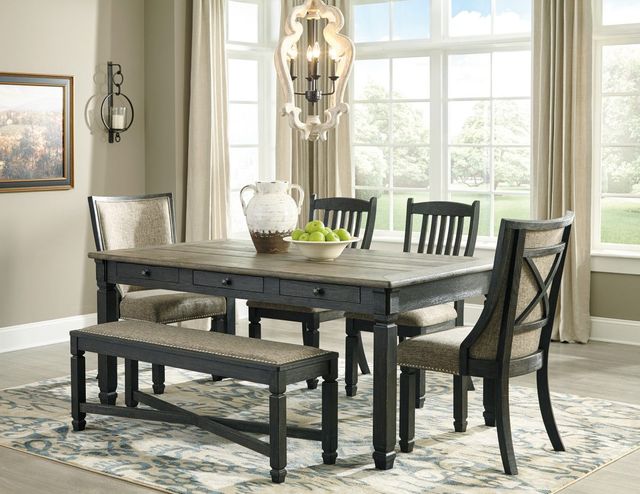
Dining room accent chairs are dining-height chairs chosen to contrast with or upgrade the standard chairs in a set, most often placed at the head and foot of the table. They carry more upholstery, more color, or more visual weight than the chairs beside them, and they are usually bought in a pair rather than a full set of six.
That last part is what separates them from a standard side chair. A side chair is armless, lighter, and built to repeat around the table. An accent chair is built to stand out, and it only has to look right twice.
Accent Chair Versus Standard Side Chair
A standard side chair is a supporting player. It tucks fully under the apron, weighs little enough to move with one hand, and disappears into the set on purpose. An accent chair does the opposite job. It anchors the ends of the table, adds a softer surface against a hard wood or glass top, and gives the eye somewhere to land.
Dining Arm Chair Versus Armless Side Chair
Arms change three things at once: comfort, width, and clearance. Guests who linger over dessert have somewhere to rest their forearms, which is the whole reason host and hostess chairs exist. In exchange, the chair gets 4 to 6 inches wider and the arm tops have to clear the table apron or the chair will never slide in.
Dining-Height Accent Chair Versus Living Room Accent Chair
This is the mistake that costs people the most money. A living room accent chair typically has a seat around 16 to 18 inches high and a seat depth well past 20 inches, with a reclined back angle built for lounging. Pull it up to a 30-inch table and the diner sits too low, too far back, and too far from the plate. Dining-height chairs are built upright and shallow on purpose.
The Roles These Chairs Play
• Host and hostess chairs, sometimes sold as captain chairs, anchoring the two ends of a rectangular table.
• Head of table dining chairs that give the person carving or serving a little more room to move.
• A single statement chair used in a corner, at a small round table, or as a desk chair between dinners.
• A pair that softens an all-wood or all-glass table with texture and color it does not have on its own.
Certain rooms gain more than others. A matching six-piece set that feels showroom-generic changes character the moment two ends stop matching. An inherited table with chairs that never quite went together gets pulled into line when a coordinated pair sets the tone. And in an open-concept great room, where the dining area has no walls of its own, two upholstered chairs give that zone a visual identity so it stops reading as leftover floor between the kitchen and the sofa.
Read more:
Stylish Living Room Table Sets for Different Needs
Reclining Sectional Sofa Guide to Styles, Sizes & Features
Dining Room Accent Chair Dimensions, Seat Height, and Table Clearance
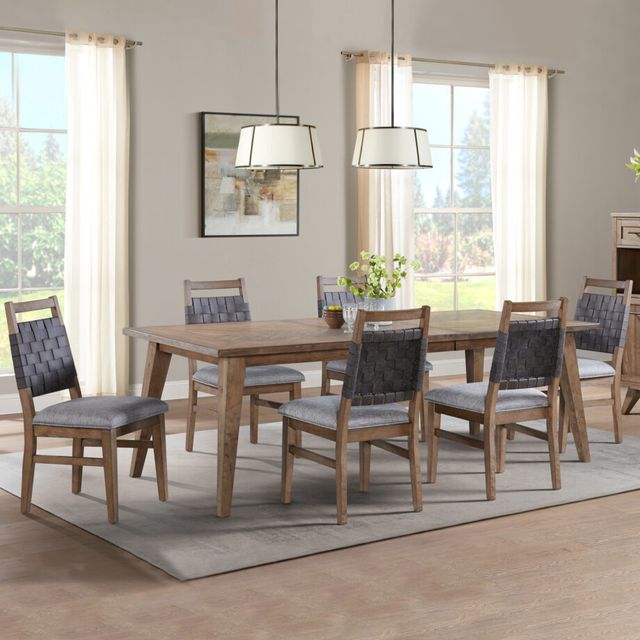
Most returns in this category are fit problems, not taste problems. Learn six numbers and you will avoid nearly all of them.
• Standard dining chair seat height: 17 to 19 inches from the floor, with 18 inches the most common.
• Standard dining table height: 28 to 30 inches, and occasionally up to 31 inches on a heavy trestle.
• Clearance between seat top and tabletop: 10 to 12 inches of thigh room.
• Side chair overall width: about 18 to 20 inches.
• Arm chair overall width: about 22 to 26 inches.
• Place setting spacing: about 24 inches of table edge per person, and 26 inches if the chairs have arms.
The Two Measurements Buyers Miss
Arm height is the first one. Measure from the floor to the top of the arm, then measure from the floor to the underside of your table apron, which is the frame rail that runs beneath the top. Arms that finish above roughly 25 to 27 inches will not slide under many tables, and a chair that cannot tuck in blocks the walkway permanently.
Overall width is the second. Two arm chairs at 25 inches each consume 50 inches of table edge. Two side chairs at 19 inches each consume 38. That 12-inch difference is half a place setting, and on a 60-inch table it is the difference between seating six and seating five.
Seat Compression Is Real
A cushioned seat measured empty is not the seat height you get. High-resiliency foam compresses under body weight, so a chair listed at 20 inches unoccupied can settle closer to 18 inches once someone sits down. That works in your favor with a deep cushion and against you if you already picked a chair at the low end of the range.
Seat depth matters for the same reason. A dining seat around 17 to 19 inches deep lets you sit back without the front edge pressing behind your knees. Back height is a room decision more than a comfort one, since a tall back looks stately at a long table and visually crowds a small one. Watch leg splay too, because rear legs that kick outward take more floor than the seat suggests and catch on a rug edge.
Shopping for an island instead of a table changes every number. Counter height stools land around 24 inches at the seat, bar height around 30 inches, and dining height stays at 17 to 19 inches. Mixing those up is the single most common seating error we see.
Take This Checklist to the Showroom
1. Table height, floor to top.
2. Apron height, floor to the underside of the frame rail.
3. Usable table edge per seat, measured side to side on each side of the table.
4. Walkway clearance behind a pulled-out chair, ideally 36 inches to the nearest wall or cabinet.
5. Doorway width and any stair turn on the delivery path.
7 Accent Chair Styles That Make Any Dining Table Look Designed
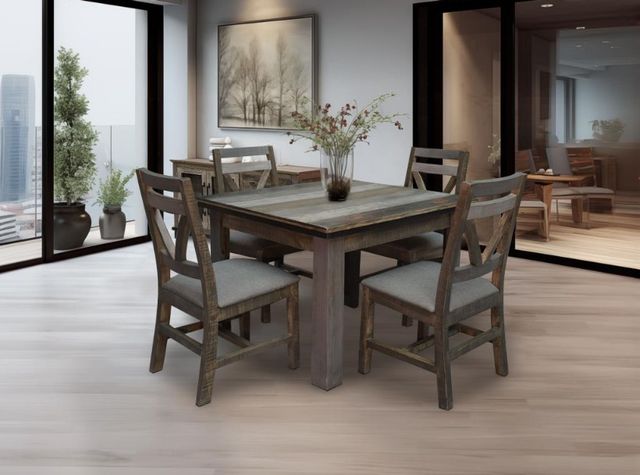
Style is where the fun starts, but comfort is what you live with. Each of the seven below is described by how it looks, how it sits, and where it falls short, because every one of them gives something up.
1. Upholstered Parsons Host Chair
The clean-lined workhorse of the category, with a straight back, a fully upholstered seat, and no exposed frame to fight your table. It suits transitional and contemporary rooms and pairs easily with wood side chairs. Comfort is medium to plush depending on foam density, and the flat back panel gives decent support for a long meal. The limitation is that a fully covered chair shows every spill, so the fabric choice carries more weight here than the shape does.
2. Wingback Dining Chair
Tall, formal, and unmistakably traditional, with side panels that frame the person sitting in it. Put one at each end of a long table in a formal dining room and the room instantly reads finished. Comfort is high, with real head and shoulder support. The honest limits are bulk and clearance, since a wingback is often the widest and deepest chair in the category, and it can look oversized in a room under about 11 feet across.
3. Barrel or Curved-Back Upholstered Chair
The curved back wraps the sitter and softens a room full of straight lines, which is why it works so well around round and pedestal tables and in mid-century or modern spaces. Comfort is medium, with side support that a flat back cannot match. The trade is the seam-heavy curve, where crumbs and pet hair collect in the crease between the seat and the back, so plan on regular crevice vacuuming.
4. Slipcovered Dining Chair
A relaxed, coastal or modern farmhouse look with a skirt that hides the legs and quiets the visual clutter under the table. The real advantage is practical rather than visual, because a removable washable cover is the most forgiving option in any home with kids. Comfort is medium and the shape is generous. The limitation is upkeep of a different kind, since covers need pulling straight after every meal and can look slouchy if they are not fitted well.
5. Tufted Low-Back Chair
Button or channel tufting adds texture and a little glamour without a tall back blocking sightlines, which makes it a smart pick for small rooms and open-plan spaces where you want to see across the table. Comfort is medium, best for shorter meals rather than three-hour holidays. The drawback is cleaning, because tufted buttons create dozens of small pockets that catch crumbs and need a soft brush attachment to clear.
6. Woven Cane or Rattan-Back Chair
Airy, light, and full of texture, cane and rattan backs suit coastal, boho, and mid-century rooms and keep a small dining area feeling open because you can see through the back. Comfort is firm unless the seat is cushioned, so pair it with a padded seat if meals run long. The limitation is fragility, since woven backs can loosen or crack over years of leaning, which makes them a better fit for a formal room used a few times a year than a daily family table.
7. Cushioned Wood-Frame Chair
The category that covers cross-back, ladder-back, and Windsor-back chairs with an upholstered or padded seat. This is the most durable style on the list, and it belongs in traditional, industrial, and modern farmhouse rooms where a wipe-clean wood frame does the heavy lifting and the cushion handles comfort. Support is medium-firm, and only the seat needs cleaning. The limitation is back comfort, since spindles and slats press harder than a padded back over a long dinner.
For households with kids and pets, the cushioned wood-frame, slipcovered, and parsons styles hold up best, since two of the three can be wiped or washed. Wingback, tufted, and cane-back chairs earn their place in a formal room that hosts a handful of times a year, where they get admired more than they get abused.
Dining Room Accent Chair Styles Compared Side by Side
Find the row that matches your room and read across. Every figure is a typical range across collections rather than a guarantee, so confirm exact specifications on the product page before ordering.
| Accent Chair Style | Best For | Typical Seat Height | Typical Width | Comfort Level | Upkeep | Price Range |
|---|---|---|---|---|---|---|
| Upholstered parsons host chair | Transitional and contemporary rooms | 18 to 19 inches | 20 to 24 inches | Medium to plush | Spot clean by code | Mid to high |
| Wingback dining chair | Formal rooms with a long table | 18 to 20 inches | 24 to 27 inches | Plush | Vacuum crevices and spot clean | High |
| Barrel or curved-back chair | Round and pedestal tables | 18 to 19 inches | 22 to 25 inches | Medium | Vacuum the seat crease weekly | Mid to high |
| Slipcovered chair | Family tables and coastal rooms | 18 to 19 inches | 20 to 24 inches | Medium | Machine washable slipcover | Mid |
| Tufted low-back chair | Small rooms and open sightlines | 17 to 19 inches | 19 to 22 inches | Medium | Brush tufts and spot clean | Mid |
| Woven cane or rattan-back chair | Coastal, boho, and mid-century rooms | 17 to 19 inches | 18 to 21 inches | Firm to medium | Dust the weave, wipe the frame | Mid |
| Cushioned wood-frame chair | Farmhouse and everyday family tables | 17 to 19 inches | 18 to 20 inches | Medium-firm | Wipe frame, spot clean seat | Entry to mid |
Read the width column and the answer for a tight room shows up fast. The cane-back and cushioned wood-frame rows fit small dining areas and apartment nooks with room to spare, while the wingback and parsons rows want a large or formal table with real walkway behind the ends. Finish and fabric tone are much harder to judge from a photo than from three feet away, so compare them in person at Missouri Furniture before you commit to a pair.
Upholstery, Performance Fabrics, and Durability for Dining Chairs
A dining chair lives a harder life than any seat in the house. It gets pushed, dragged, leaned back on two legs, and splashed with whatever is on the table. Fabric and frame decide how it looks in five years.
Matching the Material to the Meal
• Woven performance fabric: the default recommendation for a table used daily, because the stain resistance is built into the fiber rather than sprayed on top.
• Chenille: soft, warm, and good at hiding wear thanks to its texture, though the loops can snag on pet claws.
• Velvet: rich color and depth, but it shows crushing and water spots, so keep it to a formal room.
• Linen and linen blends: beautiful, breathable, and the least forgiving choice at a food table unless it is treated or slipcovered.
• Top-grain leather: the easiest wipe-down of any upholstery and it ages well, at the highest price point.
• Faux or bonded leather: the family-friendly budget answer, with the caveat that bonded surfaces can peel over years of heavy use.
Durability Signals Worth Understanding
Double rub counts measure abrasion resistance on a testing machine. Residential fabrics often land around 15,000 double rubs, and anything rated 30,000 or higher is generally considered heavy duty, which is where a daily-use dining chair should sit.
Cleaning codes are printed on a tag under the seat, and they are not suggestions. W means clean with water-based products, S means solvent only, WS means either is safe, and X means vacuum only with no liquid at all. Moisture barriers behind the fabric protect the cushion from anything that soaks through, and bleach-cleanable and stain-resistant treatments are worth asking about when kids sit at the table every night.
Here is the detail our team flags on every upholstered order: check the cleaning code tag under the seat before you use any cleaner, because most upholstery warranties specifically exclude damage caused by the wrong cleaning method, and water on an S-coded fabric can ring or shrink it permanently in one pass.
Frame and Cushion Construction
Fabric gets the attention, but the frame decides whether the chair is still tight in year eight. Look for kiln-dried hardwood frames, which resist warping as indoor humidity swings through the seasons. Corner-blocked and glued joints keep the seat from racking side to side. Sinuous spring or webbed seat support gives a little without bottoming out, and high-resiliency foam holds its shape instead of flattening into a dish.
A dining accent chair needs more frame strength than a bedroom chair for a simple reason. Bedroom chairs get sat on. Dining chairs get dragged across the floor, tipped back on two legs, and leaned on by someone reaching for the salt.
A Short Care Routine
• Vacuum the seat and back crease weekly: with a brush attachment, since grit is what abrades fibers.
• Blot spills instead of rubbing: because rubbing pushes the stain into the foam.
• Rotate the chairs around the table every few months: so one seat does not flatten while five stay firm.
• Add felt pads or chair glides under the legs and replace them once they wear thin: which protects both the floor and the joints.
How to Mix and Match Accent Chairs With Your Existing Dining Chairs
Start with the easiest formula there is: change only the two head chairs and leave the side chairs alone. It works because the ends of a table are already visually different positions, so the eye reads the change as a decision rather than an accident. Nobody looks at a table with matching sides and distinct ends and thinks something broke.
Once that click makes sense, the other formulas follow.
• Same frame, different upholstery: identical chair shapes with two of them in a contrasting fabric, the most conservative mix that still reads as designed.
• Different frames unified by one fabric or wood tone: mismatched shapes stop looking random the moment they share a single color.
• A bench on one long side: pairs beautifully with upholstered chairs on the other side, adds seating flexibility, and tucks fully under the table when not in use.
• Deliberate contrast: modern upholstered chairs at the ends with traditional wood side chairs, which is the look that makes an inherited table feel intentional.
• Odd-count statement: one accent chair in a smaller room, at a round table or in a breakfast nook, where a pair would be too much.
Keep at least one element consistent across every seat at the table, whether that is fabric color, wood finish, seat height, or back height. That single rule is what separates a curated mix from a pile of leftovers.
The practical fit rules matter just as much as the visual ones. Match seat heights within about an inch so nobody at the table sits noticeably lower than everyone else. Keep arm height under your table apron. Check that leg style does not fight the base, since a chair with a wide splayed leg can collide with a pedestal foot or a trestle stretcher long before it reaches the table edge.
For placement, two accent chairs at the ends is the standard for a rectangular table. Four accent chairs works around a square table, where every seat is a head seat. One accent chair suits a small round table or a nook.
Mixes fail for predictable reasons. Three competing wood tones is one, since two tones read as layered and three read as scavenged. Seat heights that differ by more than an inch is another, and it is immediately obvious at a set table. Too many patterns is the third, because a printed accent chair next to a printed side chair next to a printed rug gives the eye nowhere to rest.
For most households, two accent chairs deliver more visible change per dollar than any other dining room purchase. That does not make them free of trade-offs, and the trade-offs are almost always about width and upkeep rather than looks. Weigh both lists against how your table actually gets used on a Tuesday, not how it looks at Thanksgiving.
Pros
Big design impact for a modest budget:
Two chairs cost a fraction of a new dining set and change the character of the room the moment they are in place.
Real comfort for longer meals:
Padded seats, supportive backs, and arms to rest on keep guests at the table instead of drifting to the sofa after dessert.
Refreshes a set instead of replacing it:
A table you like and side chairs that still work can stay, which keeps a solid wood table out of the landfill and money in your pocket.
Flexible beyond the dining room:
A dining-height accent chair moves easily to a desk, a bedroom corner, or an entry when your needs change.
Easier to update over time:
Swapping two chairs to change a room’s color story is far simpler than committing to six matching seats every few years.
Cons
Width can cost you a seat:
Arm chairs run 22 to 26 inches wide against 18 to 20 for side chairs, and arms that sit above the apron may block the chair from tucking in at all.
Upholstery near food needs more care:
Fabric asks for vacuuming, blotting, and code-appropriate cleaning, where a wood or metal seat asks only for a wipe.
Read more:
Ashley Furniture Reviews: What to Know Before You Buy
What to Look for in a Queen Storage Bed Frame
Common Mistakes to Avoid When Buying Dining Room Accent Chairs
Every one of these shows up regularly, and every one has a one-line fix.
• Buying a living room accent chair for a dining table: Fix: check the seat height and confirm it is 17 to 19 inches, not a 16-inch lounge seat.
• Ignoring apron and arm clearance: Fix: measure floor to apron underside and floor to arm top before ordering, not after.
• Forgetting seat compression: Fix: sit on the chair and measure again, or add roughly 2 inches of settle to a deep foam cushion.
• Choosing a delicate fabric for a family table: Fix: ask for a performance weave rated 30,000 double rubs or higher, or choose a washable slipcover.
• Ordering online without sitting in the chair: Fix: sit in the closest floor model you can find, since back angle and seat edge are impossible to judge from a photo.
• Overlooking the delivery path: Fix: measure your doorway width, hallway turns, and stair landings, and ask whether the chairs arrive assembled or need assembly.
• Skipping the lead time question on special orders: Fix: confirm the fabric grade and the production window in writing before the order goes in, because custom upholstery runs on a longer schedule than stock inventory.
The One-Minute Showroom Comfort Test
Sit down for a full sixty seconds rather than three. Press your lower back into the chair and feel whether anything actually supports it. Slide the chair up to a table of the same height as yours and check whether the arms hit the edge or the apron. Then pay attention to the front edge of the seat, because a hard edge pressing behind your knees is the complaint that surfaces two weeks after delivery and never goes away.
This is exactly the part that is easier in person. At Missouri Furniture, you can sit in several chairs side by side at the same table height, hold fabric swatches against a finish sample instead of guessing from a screen, and get a straight answer from someone who knows which chairs pair with which tables. Financing options are available, and delivery with setup means the chairs arrive assembled and placed rather than in flat boxes on your porch.
One last thought on value. A well-built chair with a kiln-dried hardwood frame can be reupholstered later for a fraction of replacement cost, which is why a slightly better frame today usually costs less over ten years than two rounds of cheap seating.
The Seat Count Math That Two Arm Chairs Quietly Change
Listings tell you a table seats eight, but a table seats people by usable edge, and arm chairs redraw that math the moment they arrive. Run the numbers before you buy rather than after. Measure the usable edge on each side of your table, subtract any edge blocked by a wall or a pedestal foot, then divide by 24 inches for armless seating or 26 inches for chairs with arms. Round down, always. Then check the two ends separately, because that is where the wide chairs are going and where the width penalty actually lands.
• A 72-inch table has about 60 usable inches per long side once you account for the corners, which is two comfortable seats per side, not three.
• Two 25-inch arm chairs at the ends need roughly 26 inches of end width each, so a table narrower than about 38 inches will have the arms overhanging the corners.
• Every inch of arm width above 24 inches pushes the neighboring place setting toward the table leg, which is where elbows and chair legs start colliding.
• Adding two arm chairs to a table that currently seats eight in side chairs frequently drops real capacity to six or seven.
• A pedestal or trestle base gives some of that back, since no corner legs block where a wide chair wants to sit.
• If the math comes up short, use armless upholstered chairs at the ends instead, which delivers the same visual change without the width penalty.
Read more:
Transform Your Home with Our Unbeatable Furniture Selection
Why Missouri Furniture Has Been a Family Favorite Since 1977
Dining Room Accent Chairs Worth Adding to Your Table
The six chairs below cover the full spread discussed above, from two-tone modern rustic to classic Windsor and one upholstered arm chair built for the head of the table. Each one plays a different role, so match it to your measurements and your existing side chairs rather than to a photo. All are available with delivery and setup, and financing is available.
International Furniture Direct Loft Brown Gray Side Chair
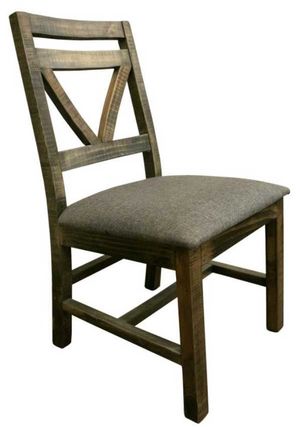
A table that reads too brown or too plain gains depth the moment two tones enter the room, and that is the job this chair does. The brown and gray combination bridges warm wood tables and cool gray flooring, the exact pairing that makes coordinating hard in newer homes. As an armless side chair it stays in the 18 to 20 inch width band covered earlier, so it tucks under an apron without stealing table edge. Choose it for a modern rustic or industrial dining room that needs texture more than it needs color.
Top Features
• Two-tone brown and gray finish: Bridges warm wood and cool gray tones when your table and flooring pull in different directions.
• Armless side chair profile: Tucks fully under the table and keeps the walkway behind the chair clear.
• Modern rustic styling: Pairs with plank tops, metal bases, and industrial lighting without looking themed.
• Flexible mixing partner: Works as a full set or as the contrast piece against a plainer existing chair.
Liberty Furniture Lindsey Farm Sandstone Weathered White Splat Back Side Chair
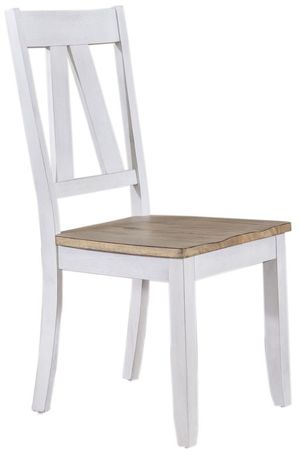
Farmhouse rooms live or die on finish, and a weathered white against sandstone is the combination that keeps the look soft instead of stark. The splat back gives the chair a clear silhouette from across an open-concept room, which is what the earlier section on visual identity was about. It falls into the cushioned wood-frame family, the most forgiving style on the comparison table, since the frame wipes clean and only the seat needs attention. A strong pick for a modern farmhouse table that gets used every night.
Top Features
• Weathered white and sandstone finish: Keeps a farmhouse palette light without washing the room out.
• Splat back silhouette: Reads clearly across an open floor plan and layers well with painted or natural wood tables.
• Wipe-clean wood frame: The low-upkeep option flagged for households with kids and pets.
• Armless width: Keeps place settings at the standard spacing so you do not lose a seat.
Intercon Oslo Gray Weathered Chestnut Dining Side Chair
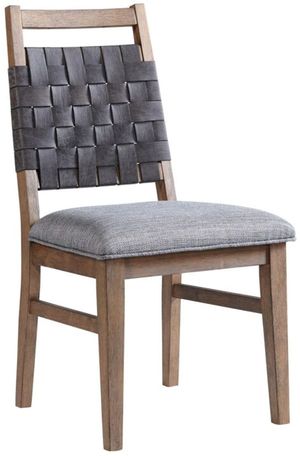
Scandinavian-influenced design keeps lines light and legs slim, which is precisely what a small dining area needs when heavy chair backs are closing the room in. The gray and weathered chestnut treatment gives the wood visible grain and movement rather than a flat stain. In a mixed table, this is the chair that unifies a group by wood tone while the shapes stay different, one of the mixing formulas covered above. It suits apartment nooks, transitional rooms, and anyone who wants warmth without bulk.
Top Features
• Weathered chestnut and gray treatment: Shows grain and texture instead of a flat painted surface.
• Slim Scandinavian-influenced frame: Keeps a compact dining area feeling open rather than crowded.
• Neutral unifying tone: Ties mismatched chair shapes together by wood color, the simplest mixing rule.
• Armless dining-height build: Sized to slide under a standard 28 to 30 inch table.
Signature Design by Ashley Tyler Creek Black Grayish Brown Upholstered Dining Side Chair
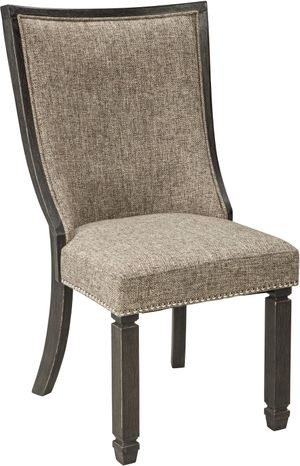
The comfort complaint that starts twenty minutes into dinner comes from hard seats, and an upholstered seat is the direct answer. This chair delivers that padding without adding the width that arms bring, so it solves the long-meal problem while keeping the seat count intact, exactly the workaround named in the seat count section. The black and grayish brown palette reads industrial in one room and transitional in another. Choose it when you want softer seating around the whole table rather than only at the two ends.
Top Features
• Upholstered seat comfort: Adds cushioning for longer meals without the extra width of an arm chair.
• Black and grayish brown palette: Works with industrial, transitional, and farmhouse tables alike.
• Armless footprint: Preserves the 24 inches of table edge per person that keeps a table at full capacity.
• Mix-friendly neutral: Coordinates easily with wood side chairs already at your table.
Liberty Furniture Farmhouse Brown White Windsor Back Side Chair
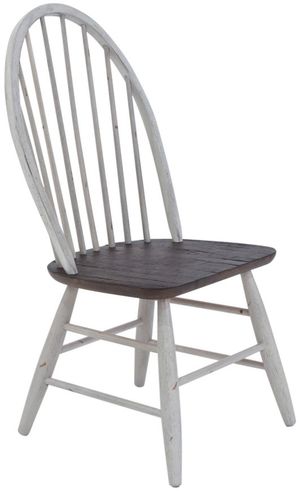
The Windsor back has stayed in production for centuries for a reason, and the spindle design does something practical in a small room by letting light and sightlines pass straight through it. The brown and white two-tone treatment updates a traditional shape for a modern farmhouse table without losing the classic outline. It belongs to the cushioned wood-frame category, so cleanup is a wipe rather than a project. Pick it for a traditional or farmhouse room where the chairs should look timeless instead of trendy.
Top Features
• Classic Windsor spindle back: A traditional silhouette that lets sightlines pass through and keeps a room open.
• Brown and white two-tone finish: Updates a heritage shape for modern farmhouse and cottage rooms.
• Durable wood construction: Handles the pushing, dragging, and leaning that dining chairs take daily.
• Compact armless width: Fits the standard place-setting spacing on rectangular and round tables.
Steve Silver Co. Auburn Beige Dark Tobacco Upholstered Dining Arm Chair
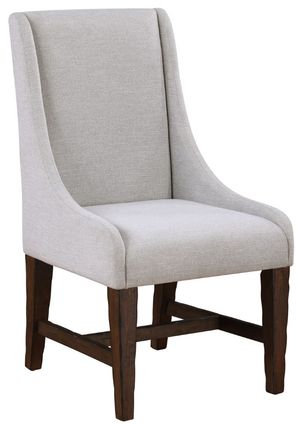
This is the host chair, the one that goes at the head of the table and makes those two seats the ones guests actually want. Upholstery in beige over a dark tobacco frame gives it enough contrast to anchor the end of a table full of wood side chairs, which is the two-chair swap this article opened with. Because it has arms, confirm the arm height against your table apron and budget about 26 inches of end width before ordering. Ideal for a formal or transitional dining room that hosts often.
Top Features
• Arms for host and hostess seating: Gives the two end seats the support that keeps guests at the table longer.
• Beige upholstery over dark tobacco: Contrast that anchors the ends of a table without clashing with wood side chairs.
• Head of table proportions: Built to read as the statement seat in a mixed set rather than another repeat.
• Measure-first fit: Check arm height against your apron and allow the wider end spacing covered earlier.
Bring Home Dining Room Accent Chairs That Add Style and Comfort
Three things decide whether this upgrade lands: measure the seat height, apron height, and usable table edge before you fall for a chair; choose a fabric and frame built for the way your family eats; and remember that swapping only the two head chairs is the easiest high-impact change you can make to a dining room. Get those right and a set that looked builder-grade at dinner starts looking designed.
Come sit in dining room accent chairs at Missouri Furniture, in the showroom or online, where you can compare seat heights side by side at a real table and hold swatches against a finish instead of guessing at a screen. Our team helps with style pairing and fabric selection, financing options are available, and delivery with setup means your chairs show up assembled and in place. That local, after-the-sale service is what an independent Missouri retailer gives you that a big-box store or an online-only seller simply does not.
Frequently Asked Questions about Dining Room Accent Chairs
A dining room accent chair is chosen to contrast with the rest of the set, usually with more upholstery, color, or visual weight, while a regular dining chair repeats around the table as a matched group. Accent chairs are typically bought in pairs for the head and foot of the table rather than as a full set of six.
Yes, as long as the chair is built at dining height with a seat 17 to 19 inches from the floor and an upright back. A living room accent chair sits too low and too deep for a dining table, which leaves the diner reaching up toward the plate.
The standard seat height for a dining room accent chair is 17 to 19 inches, with 18 inches the most common measurement. That range pairs correctly with a standard dining table height of 28 to 30 inches.
You need 10 to 12 inches of clearance between the top of the seat and the underside of the tabletop or apron. Less than that traps your thighs against the table frame, and more leaves shorter adults and children without support under their arms.
Yes, mixing is a standard design approach as long as one element stays consistent across all the seating, such as fabric color, wood finish, seat height, or back height. Keep seat heights within about an inch of each other so nobody at the table sits noticeably lower than the rest.
A woven performance fabric rated 30,000 double rubs or higher is the best choice, with a washable slipcover as the runner-up for families. Mid-tone and textured fabrics also hide everyday wear far better than pale solids do at a table where spills happen weekly.
Why Trust Missouri Furniture
Missouri Furniture is the furniture store of choice for homeowners across Missouri, offering an extensive selection of high-quality furniture, appliances, mattresses, and home essentials. With beautifully designed showrooms, competitive pricing, and a strong commitment to customer satisfaction, Missouri Furniture makes it easy to create a home you love.
Family-owned and locally operated since 1977, Missouri Furniture has built a trusted reputation for exceptional service and quality products. With decades of experience, their team is dedicated to helping customers find the right pieces to match their lifestyle, style preferences, and budget. From comfortable living room furniture and stylish bedroom sets to durable dining collections, mattresses, appliances, and even hot tubs, Missouri Furniture carries a wide range of products from trusted brands. Whether you’re furnishing a new home, upgrading a single room, or designing a custom space, Missouri Furniture offers the selection, expertise, and value you can rely on.
Shop Accent Chairs at Missouri Furniture
Explore a wide selection of quality home furnishings and exceptional customer service at Missouri Furniture. Visit one of their showroom locations throughout Missouri to experience the latest styles, comfort innovations, and home solutions from trusted brands.
Since the beginning, our family-owned business has been dedicated to helping customers transform their houses into homes with personalized service and expert guidance. Their knowledgeable team is ready to help you find the perfect furniture, mattress, appliance, or home accessory to fit your space and lifestyle. Browse the online catalog or contact your nearest Missouri Furniture showroom to get started today.